

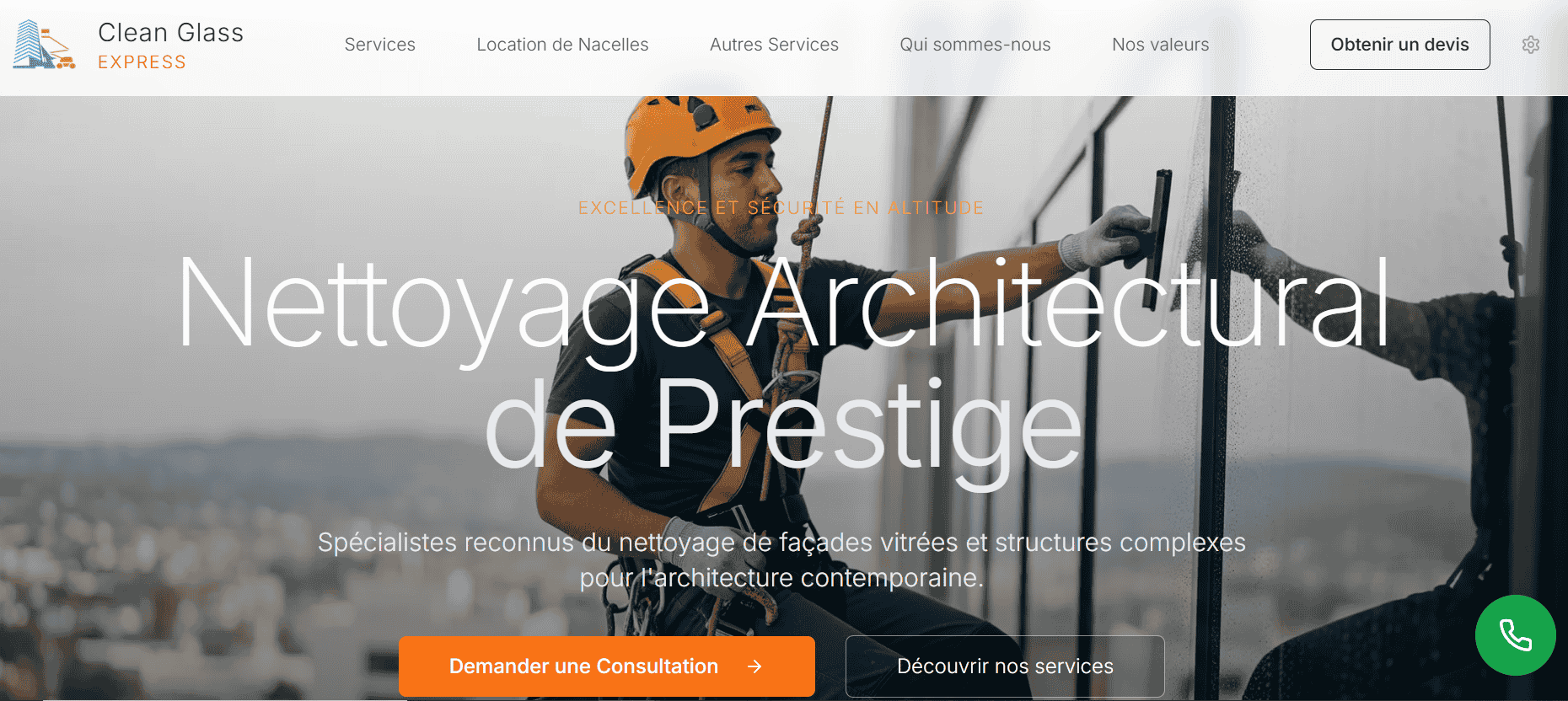
Project Overview & Scope of Work
Verified DeliverablesIn today's highly competitive digital landscape, a company's online presence is often its first—and most critical—point of contact with potential clients. For businesses operating in highly specialized and high-risk sectors, such as high-altitude architectural window cleaning, the website must reflect the exact same level of professionalism, precision, and safety as the physical services they provide.
This case study details the end-to-end development of the Clean Glass Express corporate platform—a modern, highly performant, and fully responsive web application built using the latest advancements in the React ecosystem. As a flagship piece in my frontend development portfolio, this project demonstrates my ability to merge aesthetic appeal with robust backend architecture, utilizing Next.js 14, Supabase integration, and Tailwind CSS styling.
The Client & The Core Challenge
Clean Glass Express is a leading Tunisian company specializing in high-altitude window cleaning, complex architectural maintenance, and aerial lift rentals (nacelles). With branches in Sousse, Sfax, and Tunis, they required a digital platform that could effectively communicate their 15 years of industry expertise, showcase their international certifications (ISO 9001, ISO 14001), and highlight their uncompromising safety protocols.
The challenge was twofold. First, the corporate website design needed to be visually striking and premium—evoking a sense of clarity, safety, and high altitude. Second, the backend architecture had to be flexible enough to allow the client to manage their portfolio of projects (réalisations) and service offerings dynamically, without requiring ongoing technical intervention.
Furthermore, as a commercial lead-generation tool, SEO optimization was paramount. The site needed to rank highly for local search queries related to industrial cleaning services, which dictated a server-side rendering (SSR) or statically generated approach to ensure search engine crawlers could easily read and index the content.
Architecting the Solution: The Tech Stack
To meet these demanding requirements and ensure long-term maintainability, I selected a modern web development architecture that prioritizes developer experience, lightning-fast performance, and robust scalability.
Next.js 14 (App Router)
At the core of the application lies Next.js 14. The modern App Router paradigm provided an intuitive way to structure the application using React Server Components. This architectural decision significantly reduced the JavaScript bundle size sent to the client, leading to faster Time to Interactive (TTI) and Largest Contentful Paint (LCP) metrics—both of which are crucial ranking factors for modern SEO.
Supabase Backend-as-a-Service
For the backend infrastructure, I implemented a robust Supabase integration. Supabase provided a powerful PostgreSQL database, seamless user authentication, and secure storage for high-resolution portfolio images. By leveraging the @supabase/ssr package, I ensured secure, server-side data fetching for dynamic routes, effectively turning Supabase into a highly efficient headless CMS.
Tailwind CSS & Radix UI
For styling and UI component architecture, the combination of Tailwind CSS styling and Radix UI primitives proved invaluable. Tailwind allowed for rapid, utility-first styling, ensuring a fully responsive design across all device viewports. Radix UI provided unstyled, fully accessible components (like dialogs, navigation menus, and forms) that I heavily customized to match the premium brand identity of Clean Glass Express.
TypeScript & Zod Data Validation
To ensure enterprise-grade code quality and prevent runtime errors, the entire codebase was written in strict TypeScript. Form validation, particularly for the complex contact and admin interfaces, was handled using React Hook Form paired with Zod schemas, providing a seamless and type-safe developer experience from the frontend inputs straight to the database layer.
Key Features & Implementation Details
Dynamic Content Management via Custom Admin Dashboard
One of the standout features of this full-stack development project is the custom administration dashboard. Instead of relying on a bulky, generic CMS like WordPress, I built a bespoke, secure administration panel directly within the Next.js application. This protected route allows authenticated administrators to seamlessly perform CRUD (Create, Read, Update, Delete) operations on their "Services" and "Réalisations" (portfolio items). When an admin uploads a new project image, it is automatically processed and stored in Supabase Storage, and the optimized public URL is dynamically served to the frontend.
Server-Side Rendering (SSR) for Maximum SEO Visibility
Every public-facing page, such as /services/[id] or /references/[slug], utilizes Next.js Server Components to fetch data directly from the Supabase PostgreSQL database before the page is ever delivered to the client. This means that search engine bots receive fully populated, semantic HTML documents instantly, maximizing the visibility of the client's localized content and specific expertise.
Premium UI/UX and Micro-Interactions
The user interface was meticulously crafted to reflect the "glass" and "cleanliness" aspect of the brand. I implemented a Hero section featuring a high-quality, full-bleed background image with a subtle, mathematically calculated gradient overlay to ensure perfect text contrast and legibility. Smooth micro-interactions, hover states, and staggered loading animations were incorporated using Tailwind's animation utilities and CSS transitions. This gave the site a polished, dynamic feel without sacrificing page load performance.
Overcoming Technical Challenges
The most significant technical hurdle during development was managing image optimization and loading strategies for the extensive portfolio section. High-resolution images of architectural cleaning are file-heavy and can drastically slow down page loads, negatively impacting both user experience and SEO scores.
I solved this challenge by deeply integrating the Next.js <Image> component, which automatically serves correctly sized, modern WebP-formatted images based on the user's specific device viewport. Additionally, I implemented skeleton loaders for all asynchronous data fetching, ensuring that the user experiences zero Cumulative Layout Shift (CLS) while waiting for dynamic content to render from the database.
Comprehensive SEO & Performance Optimization Strategies
To ensure the website acts as a powerful, autonomous lead-generation tool, technical SEO was baked into the frontend architecture from day one.
Dynamic Meta Tags and Open Graph: Dynamic metadata generation was implemented using the Next.js 14 Metadata API. Each specific service and portfolio page dynamically generates its own unique title, description, and Open Graph image tags based on the specific database content, highly optimizing the site for social sharing and search engine results pages (SERPs).
Strict Semantic HTML: The DOM structure strictly adheres to HTML5 semantic standards, utilizing proper heading hierarchies (
<h1>,<h2>, etc.),<nav>,<section>, and<article>tags to give search engines maximum context about the page structure.Performance Metrics First: By utilizing Next.js server components, aggressive caching strategies, and optimized assets, the application consistently scores in the high 90s on Google Lighthouse for Performance, Accessibility, Best Practices, and SEO.
Conclusion
The Clean Glass Express website is a profound testament to the power of the modern React ecosystem. By strategically combining Next.js 14, Tailwind CSS, and Supabase, I was able to architect and deliver a scalable, heavily SEO-optimized, and visually stunning corporate platform.
This portfolio project not only solved the client's immediate need for a premium digital presence and an easy-to-use content management system, but it also stands as a comprehensive demonstration of my capabilities in full-stack web development, UI/UX implementation, and complex technical problem-solving. It is a prime example of how modern web technologies can be leveraged to create real-world business value.
Applied Technologies & Focus Areas
Need a custom digital platform like Clean Glass?
Transform your business with Moocky's custom design, high-performance web engineering, and enterprise digital solutions.
Explore Other Client Successes
Discover more custom solutions engineered by Moocky.
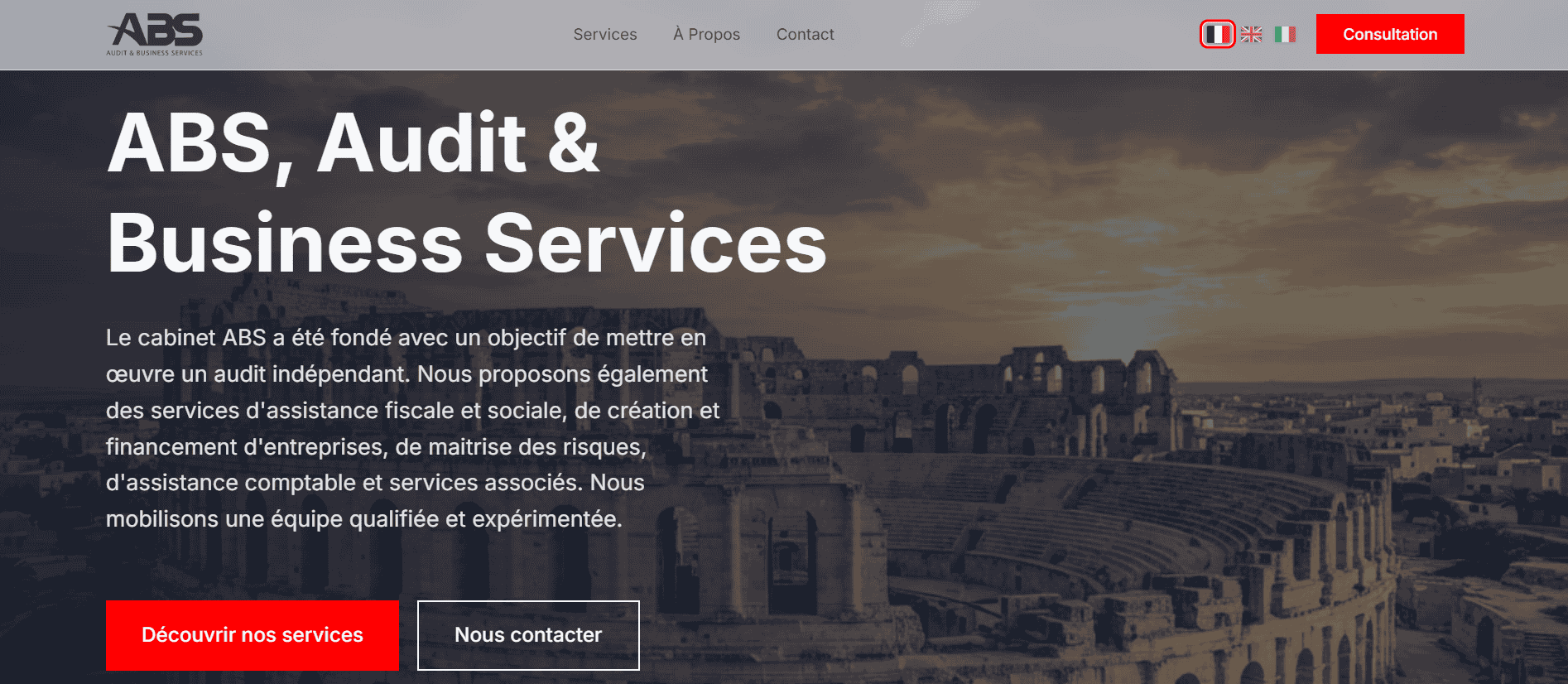

ABS audit
An in-depth technical analysis of ABSAudit.tn, a premier corporate accounting platform developed by Moocky.tn. This article explores the advanced SEO strategies, multilingual capabilities, and cutting-edge web architecture utilized to dominate search rankings, enhance user experience, and drive organic business growth for financial consulting firms.


YUKET
YUKET is the first veterinary platform in Tunisia. Scan products with AI, find the best clinics, and shop on our dedicated store.
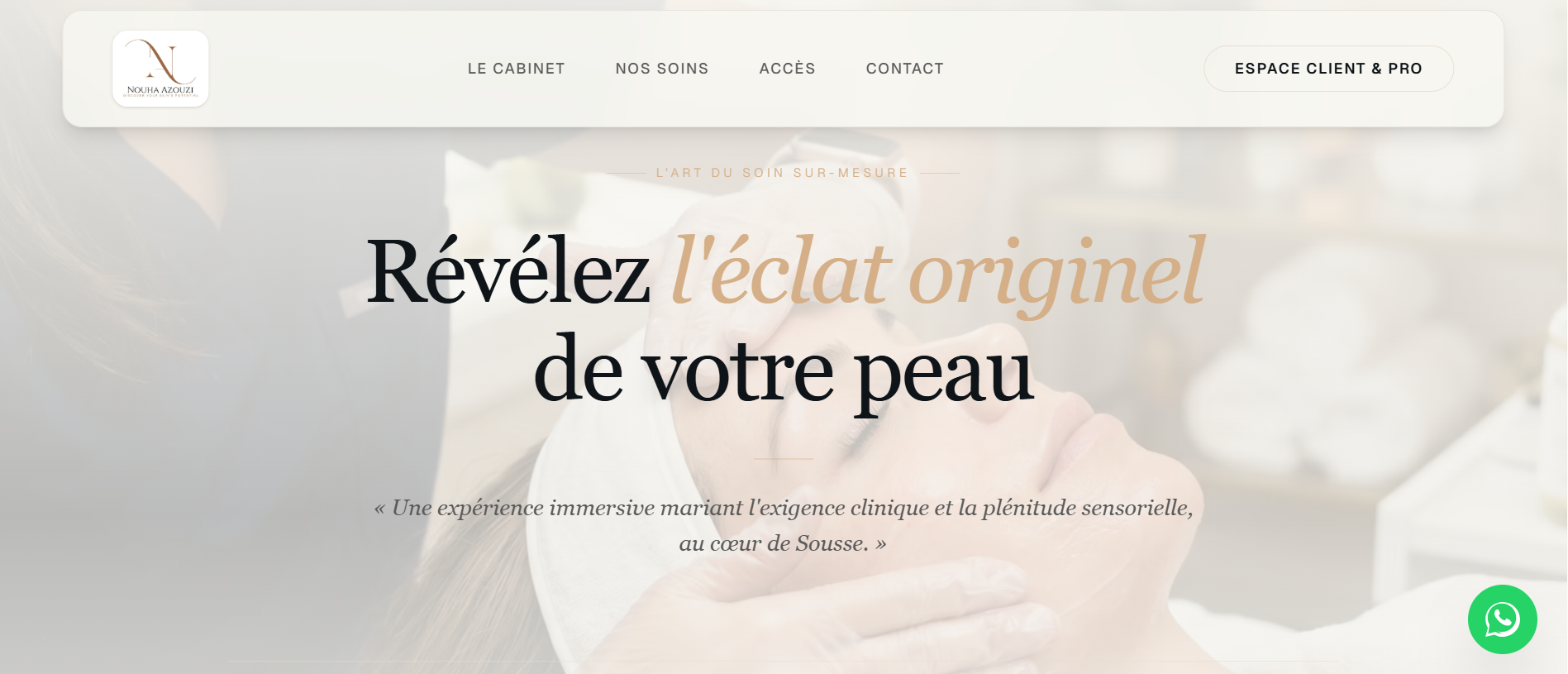

nouhaazouzi
This article details the comprehensive design and development process of the showcase website for the Nouha Azouzi premium beauty clinic. From the modern technical architecture using Next.js and Tailwind CSS to the advanced local SEO strategy utilizing Schema.org, discover how a tailored web development approach successfully elevates the online visibility of a local business.