

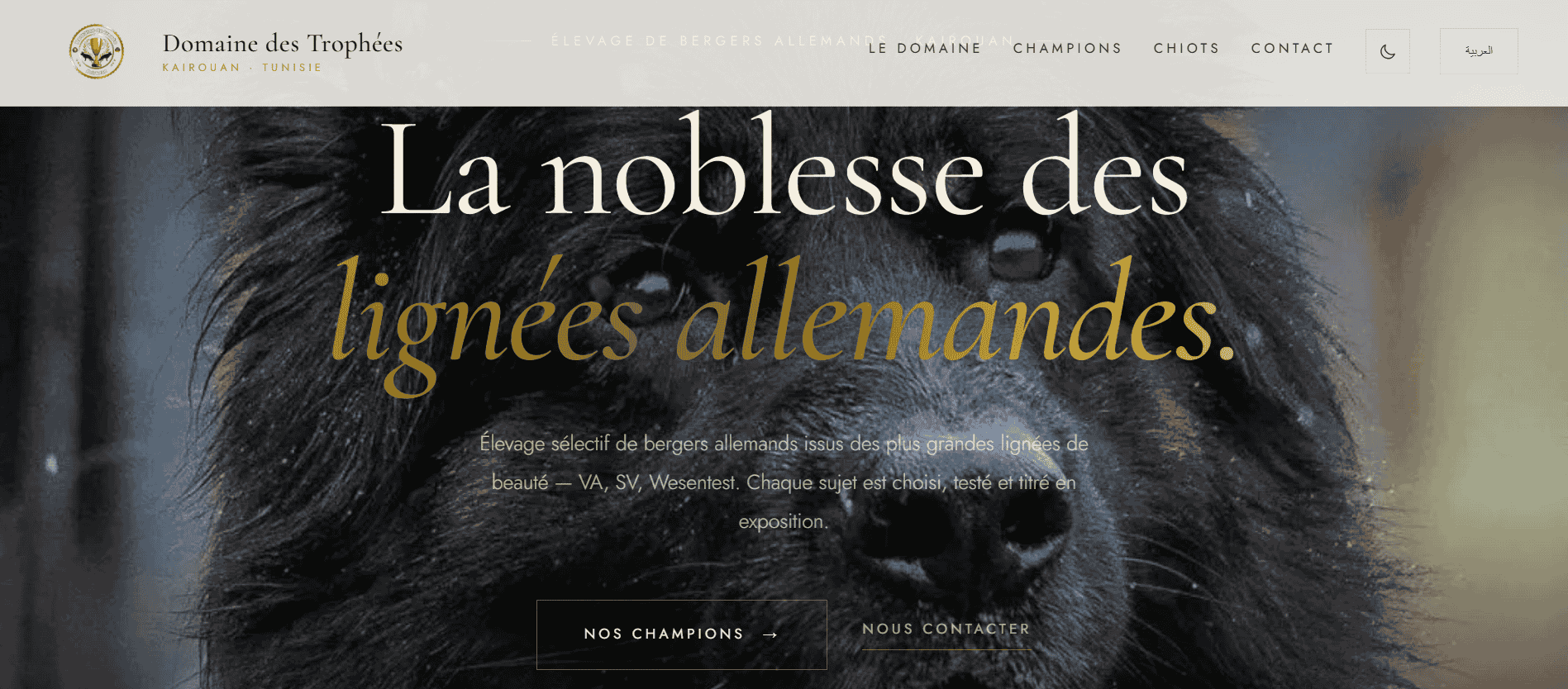
Project Overview & Scope of Work
Verified DeliverablesIn today's fast-paced digital landscape, user experience and performance are intrinsically linked. When I set out to build the digital platform for Domaine des Trophées, my primary objective was to deliver a visually stunning yet blazingly fast user interface. This article details my journey in crafting this Next.js portfolio project, highlighting the technical decisions, challenges overcome, and the rigorous frontend performance tuning required to build a truly modern, SEO-optimized React application.
The Vision and The Challenge
Domaine des Trophées required a robust online presence that could showcase high-quality products and information without compromising on speed. The modern web demands near-instant load times, flawless mobile responsiveness, and strict adherence to search engine optimization (SEO) standards.
The initial challenge was architectural: how do we present rich visual content—often heavy in file size—while maintaining top-tier Core Web Vitals? Furthermore, as the site scaled, maintaining cost-efficiency on cloud platforms like Vercel became a paramount concern. Managing infrastructure quotas while delivering a premium user experience required strategic engineering, particularly around asset delivery and server-side rendering.
The Technology Stack: A Modern Approach
To achieve the ambitious goals for Domaine des Trophées, I selected a cutting-edge technology stack tailored for speed, developer experience, and scalability.
Next.js (App Router): The backbone of this SEO-optimized React application. Next.js provides out-of-the-box features like Server-Side Rendering (SSR) and Static Site Generation (SSG), which are critical for fast First Contentful Paint (FCP) and seamless indexing by search engine crawlers.
React 19: Leveraging the latest advancements in the React ecosystem allowed for more efficient rendering cycles and better state management, contributing to the overall fluidity of the user interface.
Tailwind CSS: For styling, Tailwind CSS development offers unparalleled agility. By using utility classes, I was able to rapidly prototype and implement pixel-perfect, responsive designs without writing bloated, overarching CSS files. This approach significantly reduced the CSS payload sent to the client.
Vercel: As the deployment platform, Vercel offers deep integration with Next.js, providing edge network capabilities and automated CI/CD pipelines.
Architectural Decisions and Tailwind CSS Development
The design philosophy for Domaine des Trophées was rooted in minimalism and elegance, requiring a strict design system. Tailwind CSS development was instrumental in this phase. By configuring a custom Tailwind theme, I established a consistent typographic scale, color palette, and spacing system that permeated the entire application.
Instead of wrestling with custom CSS classes and specificity wars, I built reusable React components infused with Tailwind utility classes. This not only accelerated the development workflow but also ensured that only the necessary styles were compiled into the final production build. The result was a significantly smaller footprint, enhancing the application's time-to-interactive (TTI) metrics.
Overcoming Vercel Quota Limits: The Image Optimization Strategy
One of the most significant technical hurdles encountered during this Next.js portfolio project was related to Vercel's bandwidth and image optimization quotas. Domaine des Trophées inherently relies on high-resolution imagery to showcase its offerings. Initially, relying on the default Next.js <Image /> component led to rapid consumption of Vercel's server-side image optimization limits.
To implement effective frontend performance tuning while remaining cost-effective, I had to rethink our media delivery strategy. The solution was to bypass the default server-side optimization that was eating into our quota.
I modified the next.config.ts file to disable default Vercel image optimization:
typescriptimport type { NextConfig } from "next";
const nextConfig: NextConfig = {
images: {
unoptimized: true, // Crucial for quota management
},
};
export default nextConfig;
By setting unoptimized: true, I instructed the Vercel server to stop processing (resizing and converting to WebP/AVIF) images on the fly. Instead, the raw image URLs are passed directly to the user's browser. To ensure performance didn't degrade, I implemented a pre-optimization pipeline where images were properly sized and compressed before being uploaded to our storage (e.g., Supabase storage). This strategic pivot drastically reduced our Vercel compute usage while maintaining excellent load times, a perfect example of pragmatic frontend performance tuning.
Ensuring an SEO-Optimized React Application
Search Engine Optimization was not an afterthought; it was a foundational requirement. Next.js natively supports dynamic metadata, allowing me to inject customized title tags, meta descriptions, and Open Graph data on a per-page basis.
For Domaine des Trophées, I ensured that every page—from the homepage to the legal sections like the Terms of Service (CGU/CGV) and Privacy Policy—was easily crawlable. By utilizing Server-Side Rendering for critical landing pages, search engine bots receive fully formed HTML documents rather than waiting for JavaScript to execute.
Furthermore, semantic HTML structures, proper heading hierarchies (H1, H2, H3), and descriptive alt text for all images were strictly enforced. Combined with the performance improvements, these technical SEO practices ensured that the platform was primed to rank well in search engine results pages (SERPs).
Focus on Legal Compliance and User Trust
A professional web application must also prioritize legal compliance and user trust. I structured the application to include dedicated, easily accessible routes for essential legal documents:
/cgu-cgvfor Terms of Service and Sales./mentions-legalesfor Legal Notices./politique-de-confidentialitefor Privacy Policy.
These pages were statically generated for instantaneous loading, ensuring that users can always access their rights and our policies without delay. This attention to detail reflects a commitment to building a trustworthy and robust digital product.
Conclusion: Lessons Learned from this Next.js Portfolio Project
Building Domaine des Trophées was a highly rewarding endeavor that synthesized modern web development practices with real-world constraints. It underscored the importance of not just writing clean code, but understanding the infrastructure that hosts it.
The key takeaways from this project include:
Pragmatism in Optimization: While automated Vercel image optimization is powerful, understanding how to manually manage media delivery is crucial for scaling applications cost-effectively.
The Power of Tailwind CSS: Utility-first CSS remains unmatched for rapid, scalable frontend development, especially when integrated seamlessly with React components.
Performance is a Feature: Frontend performance tuning isn't just about passing Lighthouse audits; it's about delivering a frictionless experience that retains users and boosts SEO.
Domaine des Trophées stands as a testament to what can be achieved with a focused technology stack and a rigorous approach to performance and user experience. It perfectly encapsulates my ability to deliver an end-to-end, SEO-optimized React application that meets both business goals and strict technical standards.
Applied Technologies & Focus Areas
Need a custom digital platform like domainedestrophees?
Transform your business with Moocky's custom design, high-performance web engineering, and enterprise digital solutions.
Explore Other Client Successes
Discover more custom solutions engineered by Moocky.


ABS audit
An in-depth technical analysis of ABSAudit.tn, a premier corporate accounting platform developed by Moocky.tn. This article explores the advanced SEO strategies, multilingual capabilities, and cutting-edge web architecture utilized to dominate search rankings, enhance user experience, and drive organic business growth for financial consulting firms.


YUKET
YUKET is the first veterinary platform in Tunisia. Scan products with AI, find the best clinics, and shop on our dedicated store.


nouhaazouzi
This article details the comprehensive design and development process of the showcase website for the Nouha Azouzi premium beauty clinic. From the modern technical architecture using Next.js and Tailwind CSS to the advanced local SEO strategy utilizing Schema.org, discover how a tailored web development approach successfully elevates the online visibility of a local business.