

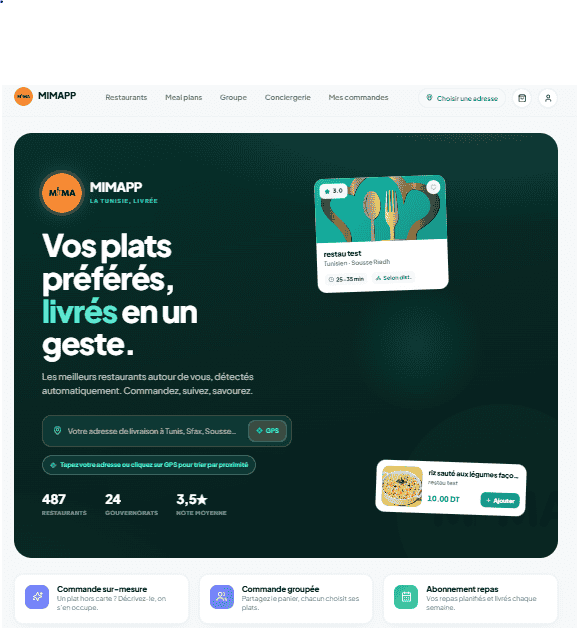
Project Overview & Scope of Work
Verified DeliverablesIntroduction
In today's fast-paced digital world, the demand for quick, reliable, and user-friendly food delivery services is higher than ever. As the market becomes increasingly saturated, standing out requires more than just a basic ordering system; it requires a robust, fully integrated ecosystem that caters to all stakeholders seamlessly. Enter Mimapp, a comprehensive food delivery platform designed from the ground up to connect hungry customers, dedicated delivery drivers, and busy restaurant administrators.
This portfolio case study delves into the journey of modern food delivery app development, highlighting the architectural decisions, technical stack, and user-centric design principles that brought Mimapp to life. Whether you are looking for a reliable restaurant delivery solution or exploring the technical capabilities of a modern React Native delivery app, this deep dive into the Mimapp project will provide valuable insights into building scalable mobile ecosystems.
The Challenge: Navigating a Fragmented Delivery Landscape
The primary challenge in advanced food delivery app development is orchestration. A successful platform cannot exist as a single, isolated application; it must be a synchronized suite of applications communicating in real-time. Customers need a frictionless browsing and checkout experience. Delivery drivers require optimized routing, clear earning metrics, and instant push notifications. Meanwhile, restaurant owners and system administrators need a centralized dashboard to manage menus, track active orders, and monitor overall business health.
Building these distinct interfaces while ensuring they share a single, reliable source of truth is technically complex. Data must flow instantaneously—from the moment a customer confirms their shopping cart, to the kitchen preparing the meal, and finally to the driver navigating to the drop-off location. Any latency or synchronization failure can result in cold food, frustrated customers, and lost revenue.
The Solution: Introducing Mimapp
To address these complex challenges, I engineered Mimapp as a highly cohesive multi-app ecosystem. Rather than forcing all functionalities into a bloated, monolithic application that compromises the user experience, Mimapp is divided into distinct, purpose-built interfaces tailored to each specific user persona. This separation of concerns not only enhances the overall user experience but also makes the codebase much more maintainable and scalable for future feature expansions.
The Mimapp ecosystem is structured as an advanced monorepo consisting of the following core components:
The Customer App (Ecrin): A sleek, intuitive mobile interface designed for browsing restaurants, customizing detailed orders, and tracking live deliveries in real-time.
The Driver App (Course): A dedicated application for delivery partners, featuring precise geolocation, smart route optimization, and transparent earnings tracking.
The Admin Dashboard (Pilotage): A powerful command center for restaurant owners and platform managers to oversee daily operations, manage inventory, and analyze sales data.
The Web Platform: A fully responsive web application that ensures accessibility across all desktop and mobile browsers, expanding the platform's reach beyond native mobile users.
Architectural Deep Dive: Building a React Native Delivery App
To deliver a premium, native-feeling experience across both iOS and Android platforms without the overhead of maintaining two entirely separate codebases, I chose React Native—powered by Expo—for the mobile applications. This strategic decision was pivotal in accelerating the development timeline while ensuring high performance, fluid animations, and a consistent look and feel across platforms.
The Customer Experience: Speed and Simplicity
The customer-facing application is the beating heart of Mimapp. It relies heavily on modern UX/UI principles to minimize friction during the discovery and checkout processes. By utilizing React Native's robust component ecosystem, the app features smooth screen transitions, rich imagery handling, and highly responsive search and filter functionalities. Real-time state management ensures that users are kept in the loop at every single stage of their order, from kitchen preparation to the exact moment the driver arrives at their doorstep.
The Driver App (Course): Efficiency on the Go
For delivery drivers, the app is their primary daily work tool. The "Course" app within the Mimapp ecosystem integrates deeply with native device capabilities such as GPS background tracking and rich push notifications. The interface is meticulously designed for high contrast and features large touch targets, prioritizing safety and ease of use while the driver is on the move. Drivers receive instant alerts for new delivery requests and rely on seamless map integrations to calculate the fastest, most efficient routes.
The Management Hub (Pilotage): Total Operational Control
The "Pilotage" app serves as the brain of the operation. This administrative dashboard allows restaurant managers to instantly update their menus, adjust pricing dynamically, toggle item availability in real-time, and view comprehensive analytics. Building this as part of a unified monorepo allowed for maximum code sharing—particularly UI components and business logic—between the administrative tools and the consumer-facing apps.
Powering the Ecosystem: A Robust Supabase Backend
A sophisticated frontend is only as powerful as the backend that supports it. For Mimapp, I implemented a highly performant Supabase backend to handle the heavy lifting. Supabase, an open-source Firebase alternative, provided the perfect combination of relational database integrity (PostgreSQL) and lightning-fast real-time capabilities.
Real-Time Data Synchronization
In a fast-paced restaurant delivery solution, real-time data is non-negotiable. When a restaurant accepts an order via the Pilotage dashboard, the Customer app must update instantly to reflect the "Preparing" status, and the Driver app needs an immediate dispatch ping. Supabase's real-time database subscriptions made this complex orchestration possible with minimal overhead, eliminating the need to write and maintain complex custom WebSocket implementations from scratch.
Security and Authentication
Handling sensitive user data, payment information, and delivery logistics requires stringent security measures. Supabase's built-in authentication seamlessly handles user sign-ups, secure passwordless logins, and strict role-based access control (RBAC). This guarantees that a delivery driver can only access data relevant to their assigned routes, while a restaurant manager has complete, exclusive visibility over their specific establishment's financial and operational data.
Scalable Data Modeling
Using PostgreSQL via the Supabase backend allowed for highly structured, predictable, and scalable data modeling. The database schema was carefully engineered to handle complex, highly-relational queries between users, active orders, restaurants, menu items, and delivery coordinates efficiently. This solid structural foundation guarantees that Mimapp can smoothly handle massive surges in concurrent orders during peak dining hours without any performance degradation.
Overcoming Technical Hurdles in a Multi-App Ecosystem
Developing a comprehensive multi-app ecosystem from scratch comes with its unique set of technical hurdles. One of the primary challenges was managing shared dependencies and maintaining a strictly consistent design language across the four different apps (Customer, Driver, Admin, and Web).
To solve this, I heavily leveraged a monorepo architecture. By keeping all applications and shared packages (such as UI components, utility functions, and Supabase client configurations) within a single Git repository, I could ensure strict version consistency and rapidly propagate updates across the entire ecosystem. If a primary button's styling was updated in the shared UI library, the visual change was instantaneously reflected across the customer app, the driver app, and the web platform, ensuring brand consistency.
Furthermore, integrating real-time location tracking for the drivers required careful optimization. I had to balance the need to prevent excessive battery drain on the driver's device while still maintaining accurate, up-to-the-second location updates for the customers anxiously awaiting their meals on the map.
Results and Key Takeaways
The successful development of Mimapp serves as a powerful testament to the capabilities of modern web and mobile technologies. By thoughtfully combining a React Native delivery app architecture with a highly responsive, real-time Supabase backend, I was able to create a professional-grade, enterprise-ready restaurant delivery solution.
Key achievements of the Mimapp project include:
Unified Codebase: Achieved significant code reuse across four distinct applications using a well-structured, easily maintainable monorepo.
Real-Time Synergy: Successfully orchestrated instantaneous communication between customers, drivers, and restaurants, drastically minimizing delivery times and maximizing operational transparency.
Scalable Architecture: Built a robust, PostgreSQL-backed data layer capable of handling complex relational queries and high-volume transactions securely and reliably.
Premium User Experience: Delivered smooth, native-like mobile experiences with highly intuitive interfaces tailored specifically to the unique needs of each user persona.
Conclusion
Mimapp is far more than just a portfolio piece; it is a fully realized portfolio case study demonstrating the end-to-end lifecycle of complex food delivery app development. From conceptualizing the initial system architecture to implementing real-time database subscriptions and crafting pixel-perfect, accessible mobile interfaces, this project showcases my ability to architect, design, and deploy comprehensive, multi-faceted software ecosystems.
The technologies chosen—React Native for cross-platform frontend efficiency and Supabase for a powerful, scalable backend—proved to be an exceptional modern stack for building real-time applications. As the digital landscape continues to evolve and user expectations rise, the methodologies and architectural patterns established in Mimapp will serve as a remarkably solid foundation for building the next generation of interconnected digital products.
17:03
Applied Technologies & Focus Areas
Need a custom digital platform like MIMAPP?
Transform your business with Moocky's custom design, high-performance web engineering, and enterprise digital solutions.
Explore Other Client Successes
Discover more custom solutions engineered by Moocky.


ABS audit
An in-depth technical analysis of ABSAudit.tn, a premier corporate accounting platform developed by Moocky.tn. This article explores the advanced SEO strategies, multilingual capabilities, and cutting-edge web architecture utilized to dominate search rankings, enhance user experience, and drive organic business growth for financial consulting firms.
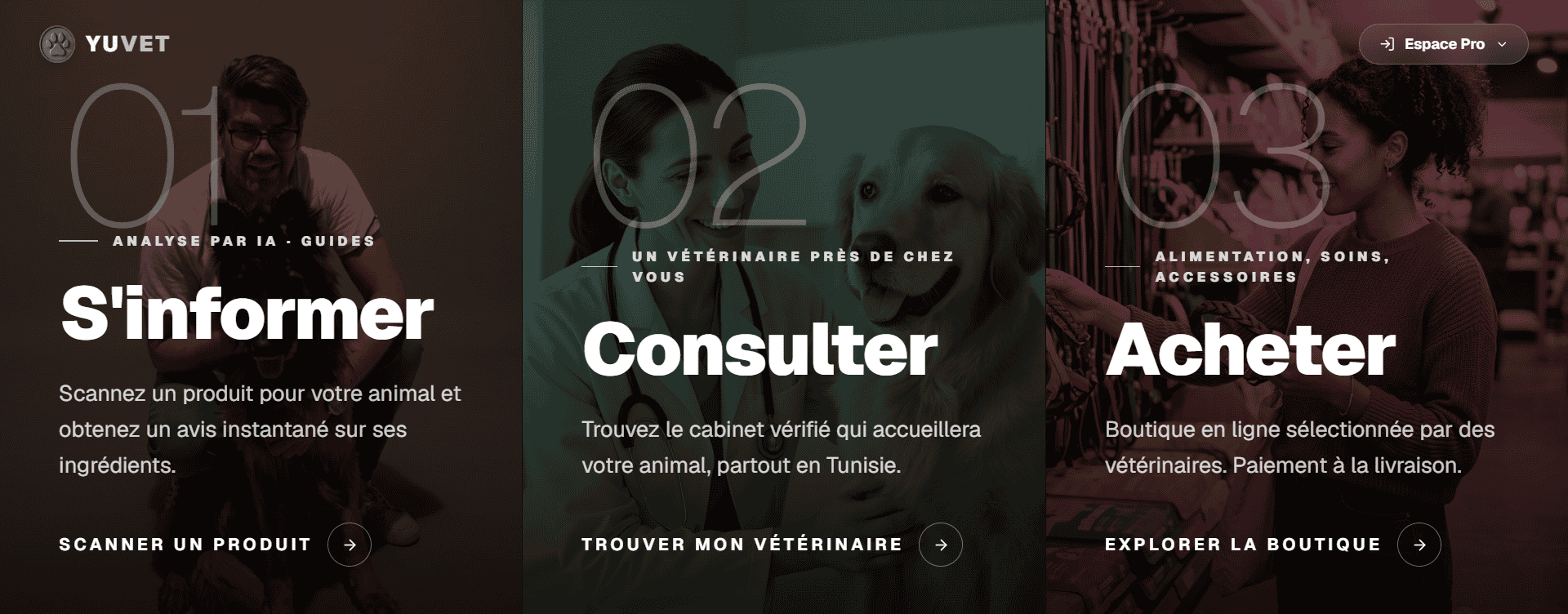

YUKET
YUKET is the first veterinary platform in Tunisia. Scan products with AI, find the best clinics, and shop on our dedicated store.


nouhaazouzi
This article details the comprehensive design and development process of the showcase website for the Nouha Azouzi premium beauty clinic. From the modern technical architecture using Next.js and Tailwind CSS to the advanced local SEO strategy utilizing Schema.org, discover how a tailored web development approach successfully elevates the online visibility of a local business.